
Reconnect. Learn. Transform.
The Indigenous Editors Circle is a five-day educational gathering that brings Indigenous editors, storytellers, and publishing professionals together to strengthen the practices that guide Indigenous storytelling. Non-Indigenous publishers also take part, joining the Circle for learning, dialogue, and relationship building.
More than a training program, the Circle is a space for relationship-building and collective reflection. Participants engage with ethical practices, community-centred approaches, and the responsibilities that come with editing Indigenous stories. The gathering honours the legacy of the IEA's late founder, Dr. Gregory Younging, whose vision continues to guide the organization's commitment to Indigenous-led publishing.
Origins
The Circle began in 2014 as the Aboriginal Editors Circle, a gathering of writers, publishers, and arts administrators in Saskatchewan led by Joanne Gerber. It met again in 2015, when participants developed draft guiding principles for working with Indigenous authors and editors, and in 2017 at Humber College in Adoobiigok. Those gatherings showed the need for a lasting, dedicated place for Indigenous editors to gather and respond, and the IEA was incorporated in 2019 under the B.C. Societies Act. The Circle is now an ongoing component of the IEA's programming.
The Circle's approach draws on the "braid" methodology developed at the 2015 Circle. Indigenous and non-Indigenous participants learn together through shared sessions and meals, and Indigenous participants also have dedicated space to address shared challenges and emerging concerns within the storytelling industry.
Purpose and Approach
The Circle supports the professional development of Indigenous editors and those working closely with Indigenous stories. Over the course of the week, participants explore cultural protocol, Indigenous-centred editing methods, and approaches that honour the sovereignty of story.
Sessions are grounded in dialogue and guided by the principles of Ethical Space, a framework that encourages participants to reflect on power imbalances, build shared understanding, and approach knowledge with humility. Through workshops, talking circles, and facilitated discussions, the Circle fosters an environment where lived experience, community teachings, and practical editorial skills come together.
This holistic approach reflects the IEA's broader mission: to ensure that storytelling and publishing involving Indigenous Peoples is respectful, accountable, and centred in community needs and values.
The 2025 Indigenous Editors Circle
Held from May 4 to 9, 2025, at the En'owkin Centre in Penticton, BC, the 2025 Circle took place on the territory of the Syilx Okanagan Nation and marked the first in-person Circle since 2017, as well as the first hosted entirely by the Indigenous Editors Association. The first two days were for Indigenous participants. For the final three days, non-Indigenous publishers joined the Circle for learning, dialogue, and relationship building.
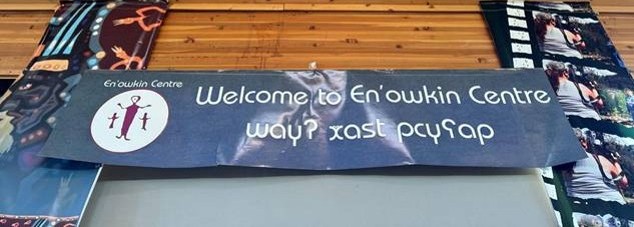
Gathering on Syilx Okanagan Territory
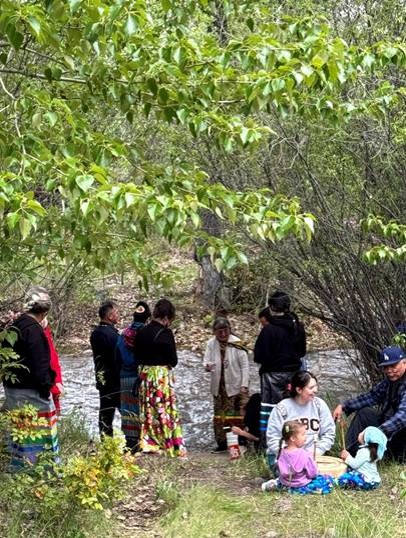
Hosting the Circle in SnPink'tn was significant. The Syilx People hold deep relationships with the land, water, and stories of the region, and participants were welcomed into this place with teachings, song, and ceremony.
The opening day included a welcome from Hereditary Chief Adam Eneas and teachings from Jeannette Armstrong and Tracey Kim Bonneau. Together, they grounded the gathering in the responsibilities that come with working in story. Throughout the week, participants were reminded that editorial practice is not only a technical skill but a relationship that must be carried with care, reciprocity, and respect for place.
A highlight of the week was the Salmon Release Ceremony on SnPink'tn lands, where participants joined community members in returning salmon fingerlings to the water. This ceremony offered a reflection on renewal and the importance of collective stewardship.
Program Highlights
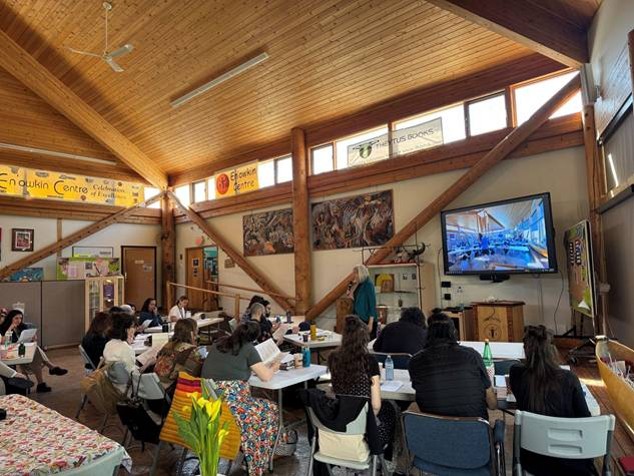
The 2025 program offered a mix of teaching, hands-on learning, and guided reflection. Throughout the week, participants moved between instructional sessions, collaborative discussions, and daily circles that supported them in applying what they were learning to their own editorial practice.
Walking in Truth
This session introduced participants to Indigenous-led approaches to editing. Facilitators explained how editorial decisions shift when working with Indigenous language, community knowledge, and cultural teachings, and why these elements often cannot be edited using standard industry rules. Participants reviewed examples of style sheets and guidelines adapted to meet community needs and discussed practical ways to avoid edits that alter or dilute cultural meaning.
Ethical Space Sessions
These sessions focused on working respectfully when different worldviews, expectations, or communication styles intersect within a publishing project. Facilitators walked participants through slowing conversations, asking the right questions, and making room for perspectives often overlooked in mainstream publishing. The goal was to give participants reliable ways to navigate disagreements, clarify roles, and keep projects on track without compromising cultural accuracy or community relationships.
Talking Circles
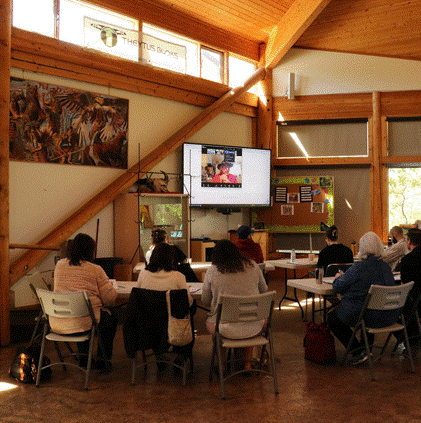
Talking Circles were held at the end of each day. Everyone had the option to speak or listen as the group reflected on what they had learned, what felt challenging, and what they were noticing in their own editorial practices. These circles helped participants process the material together, apply it to real situations in their work, and build supportive relationships with others facing similar responsibilities.
Looking Ahead
The Indigenous Editors Circle remains a cornerstone of the IEA's mandate to support Indigenous Peoples who work with stories. Its impact extends beyond the week itself, strengthening networks of care and collaboration that continue long after participants return home. As the IEA expands its programs and resources, the Circle will continue to play a key role in shaping a future where Indigenous stories are shared responsibly.
Acknowledgements
The Indigenous Editors Association extends its sincere gratitude to the En'owkin Centre and the SnPink'tn Band for their warm welcome and support throughout the 2025 Indigenous Editors Circle. We are deeply grateful to be able to gather and learn in this place.
We also thank the organizations whose financial support made this gathering possible: the Canada Council for the Arts, the Indigenous Voices Awards, Orca Book Publishers, McClelland & Stewart, the Gabriel Dumont Institute, the University of Alberta Press, Simon & Schuster Canada, the Book Publishers Association of Alberta, Simon Fraser University, and the Government of Canada through the Canada Book Fund.
We are grateful to our partners, GoodMinds.com and the Indigenous Literary Studies Association, for their continued collaboration and commitment to Indigenous-led publishing.
Finally, we extend heartfelt thanks to our individual sponsors: Kieran Leblanc, Elisia Snyder, Iva Cheung, Debs Dawson, Anne Louise Mahoney, Barbara Pulling, Lynn Slobogian, Tania Willard, and Don Richardson. Their generosity helped ensure that participants could attend this gathering without barriers.

Contact Us
7397 - 515 Hastings St W
Vancouver, British Columbia, Canada, V6B 5K3
A info [at] indigenouseditorsassociation [dot] ca
Statement of Gratitude:
The lands we live on connect us to the stories of our past and those that will be told in the future-the stories upon which our profession is based. These lands sustain and nourish us, and our relationships with each other help us thrive. The Indigenous Editors Association gives thanks to the the xʷməθkʷəy̓əm, Sḵwx̱wú7mesh, and səlilwətaɬ Peoples who continue to steward the lands on which our head office is located, in Vancouver, BC. It is in this spirit of gratitude that we carry out our work as Indigenous members of the publishing community.
